

Weddings at San Francisco’s City Hall are getting more popular. As a photographer who spends at least 50% of her time photographing these weddings, I thought it would be fun to cover the ins and outs of having a Mayor’s Balcony Wedding at SF City Hall.
If you are new here, make sure to check out my blog: Planning a San Francisco City Hall Wedding where I talk all about getting married at City Hall.

Ada & Andy’s Mayor’s Balcony Wedding
EVERYTHING YOU NEED TO KNOW ABOUT SAYING “I-DO” ON MAYOR’S BALCONY
City Hall wants to accommodate you as best as possible. To do this, they offer a One-hour Wedding Day package. This package is perfect for couples looking for a smaller ceremony and aren’t wanting to spend a lot of money.
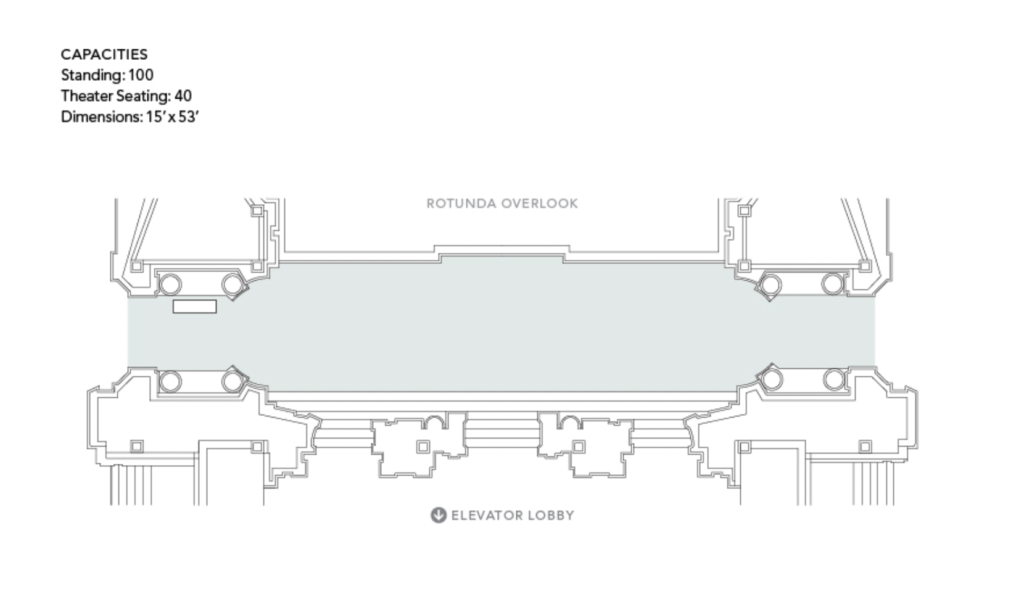
Mayor’s Balcony Floor Plan
CITY HALL’S ONE HOUR WEDDING PACKAGE
The One-Hour Wedding Package costs $1,000. This includes access to Mayor’s Balcony for one hour. You are able to have up to 100 guests. If you would like to have chairs, the fee is additional which you can access is here. That price also covers insurance and basic building services.
It is available Monday – Friday. The earliest ceremony option starts at 9:00 A.M. and the latest starts at 3:00 P.M.
Interested in booking this package? Check out their One-Hour Wedding Availability Calendar! They recommend picking a few different dates before getting them a call to actually book!

Wedding at San Francisco City Hall
ADDITIONAL INFORMATION ABOUT MAYOR’S BALCONY
When planning your wedding, you need to keep in mind that you are not able to do any food/beverages. There just isn’t enough time in your limited one hour.
You are able to have musicians play, but they have to be acoustic, the need to be selected from a qualified list, and be pre-approved. You are only allowed to have a max of two musicians.
San Francisco City hall remains open to the public during the one-hour package. They also DO NOT PROVIDE AN OFFICIANT. You also need to have your marriage license BEFORE your wedding.


THOUGHTS FROM A CITY HALL WEDDING PHOTOGRAPHER
As a Wedding Photographer who has shot countless weddings not only at San Francisco City Hall but on Mayor’s Balcony, I have lots of thoughts on the matter.
I always recommend choosing the one-hour package simply because it makes your wedding day so easy! I mean, they set up for you and you are able to use that one hour however you want!
A Typical Mayor’s Balcony Wedding:
I usually see couples do a 20 – 30 minute ceremony and then follow it up with taking family portraits.
My Recommendation:
You should come two hours before your ceremony to take portraits in San Francisco City Hall. That way after the ceremony and other photos are finished, you can leave to celebrate with them.

SF City Hall Wedding
How FastpayoutCasinos Explains Withdrawal Speed Standards in Australian Online Gambling
Withdrawal speed has become one of the most scrutinised aspects of online casino performance in Australia, shifting from a secondary consideration to a primary benchmark by which platforms are evaluated. This change did not happen overnight. It reflects years of regulatory tightening, technological advancement in payment processing, and a more informed player base that understands the difference between a casino that holds funds unnecessarily and one that processes payouts as a genuine operational priority. Understanding how withdrawal standards are defined, measured, and communicated requires looking at both the regulatory environment and the practical mechanics of how money moves between a licensed operator and an Australian bank account or digital wallet.
The Regulatory Framework Shaping Payout Expectations in Australia
Australia’s online gambling landscape is governed primarily by the Interactive Gambling Act of 2001, which was significantly amended in 2017 to restrict unlicensed offshore operators from actively targeting Australian residents. While the legislation focuses heavily on licensing and service eligibility, it has indirect consequences for withdrawal standards because it pushed many Australian-facing operators toward jurisdictions with stricter compliance requirements, particularly Malta (MGA), Gibraltar, and the Isle of Man. These licensing bodies impose their own standards on how quickly operators must process withdrawal requests, and those standards have gradually raised expectations across the board.
The Malta Gaming Authority, for instance, requires that operators process withdrawal requests within a reasonable timeframe and explicitly prohibits practices designed to delay or discourage withdrawals. While “reasonable” is not defined as a fixed number of hours in the MGA’s published guidelines, enforcement actions have historically targeted operators where processing times exceeded five business days without documented justification. This regulatory pressure, combined with competitive market dynamics, has pushed the effective industry standard in Australian-facing markets toward 24 to 72 hours for most withdrawal methods, with e-wallets such as PayPal, Skrill, and Neteller often completing within hours rather than days.
The Australian Communications and Media Authority (ACMA) has also played a role, not by setting payout timelines directly, but by blocking non-compliant offshore sites and effectively concentrating the active market around operators who maintain proper licensing. When unlicensed operators are removed from the accessible pool, the remaining platforms tend to be those with functioning compliance departments, which correlates with more transparent and consistently applied withdrawal policies. By 2023, ACMA had issued over 600 website blocking notices, and the cumulative effect has been a market where the operators still accessible to Australian players are, on average, more accountable on financial processing standards than the broader global pool of gambling sites.
It is also worth noting that Australia does not have a domestic online casino licensing framework — the Interactive Gambling Act prohibits Australian entities from offering real-money casino games to Australian residents without specific exemptions. This means all legally accessible online casinos operating in the grey-market space are licensed offshore, and their payout obligations are defined entirely by their foreign regulator rather than any Australian consumer protection law. This creates an information gap that industry reviewers and comparison platforms have stepped in to address, documenting how operators actually perform on withdrawal timelines rather than relying solely on their stated policies.
How FastpayoutCasinos Defines and Measures Withdrawal Speed Standards
The task of translating regulatory frameworks and operator policies into practical, player-facing information falls to specialist review organisations that track real-world performance rather than marketing claims. FastpayoutCasinos has developed a methodology for assessing withdrawal speed that distinguishes between three separate stages of the payout process: the internal processing period, the payment provider transit time, and the final clearance at the receiving institution. This distinction matters because operators frequently cite only the first stage when advertising their withdrawal speeds, creating the impression that funds arrive faster than they actually do.
Internal processing refers to the time between a player submitting a withdrawal request and the operator releasing the funds to the payment processor. This stage is entirely within the operator’s control and is where most delays occur. A casino might advertise “instant withdrawals” while maintaining a 24-hour internal review window, which technically precedes the payment process rather than being part of it. Payment provider transit is the time the processor takes to move funds from the operator’s account to the player’s account — this varies significantly by method, with bank transfers typically taking one to three business days and e-wallets completing within minutes to a few hours. Final clearance at the receiving bank can add another one to two business days for traditional transfers, though this stage is outside both the operator’s and the payment provider’s control.
The information compiled by FastpayoutCasinos online reflects actual withdrawal experiences drawn from documented test transactions and user-reported data, rather than relying on operator-supplied information alone. This approach reveals a consistent pattern in the Australian market: operators that advertise fast withdrawals frequently perform well on e-wallet transactions but have significantly longer timelines for bank transfers, sometimes extending to five to seven business days once all three stages are accounted for. Conversely, some operators that do not prominently advertise withdrawal speed actually process bank transfers within two business days because their internal review systems are automated rather than manually reviewed.
The methodology also accounts for verification requirements, which are a common source of unexpected delays. Know Your Customer (KYC) checks are mandatory under anti-money laundering regulations, and operators are required to verify identity before processing significant withdrawals. The question is not whether KYC exists — it must — but how efficiently an operator’s system handles it. Platforms that request documentation proactively during account creation and process verification before a withdrawal is requested can complete the KYC stage in under an hour. Platforms that only initiate verification when a withdrawal is requested may add 24 to 72 hours to the overall timeline, particularly if manual document review is involved. This distinction is rarely captured in simple “withdrawal time” claims but significantly affects the player experience.
Payment Methods and Their Actual Impact on Withdrawal Timelines
The payment method selected by a player is one of the most significant variables in determining how quickly a withdrawal completes, but the relationship between method and speed is more nuanced than most guides suggest. E-wallets are consistently cited as the fastest option, and in terms of operator-to-wallet transfer time, this is accurate. However, the speed advantage of e-wallets depends on whether the player has previously completed identity verification with the e-wallet provider itself. Skrill and Neteller, both owned by Paysafe Group, have their own KYC requirements, and a new user who has not completed this verification may find that funds arrive in their e-wallet quickly but cannot be withdrawn to a bank account until verification is complete — a process that can take two to three business days.
PayPal, which re-entered the Australian gambling market in 2017 after an extended absence, operates under slightly different conditions. Australian PayPal accounts linked to bank accounts generally allow instant transfers to the linked account, but PayPal’s own review processes can hold incoming gambling-related transactions for up to 24 hours in some cases, particularly for accounts that have not previously received gambling deposits. This is not a casino-side delay but a PayPal policy applied at the receiving end, and it is rarely mentioned in casino withdrawal documentation.
Cryptocurrency has emerged as a significant alternative for Australian players seeking faster and more predictable withdrawal timelines. Bitcoin, Ethereum, and stablecoins like USDT process on blockchain networks where confirmation times are determined by network congestion and transaction fees rather than business hours or banking infrastructure. A Bitcoin withdrawal can complete in 10 to 60 minutes under normal network conditions, though during periods of high congestion in 2021 and 2022, confirmation times extended significantly. More practically, cryptocurrency withdrawals bypass the banking system entirely, which removes the one-to-two business day clearance period that affects traditional transfers. The trade-off is volatility risk for non-stablecoin options and the technical knowledge required to manage a cryptocurrency wallet securely.
Bank transfers via direct deposit remain the most common withdrawal method for Australian players, partly because they are universally available and do not require setting up a separate account with a third-party service. The timeline for bank transfers is determined by the SWIFT network for international transfers or the NPP (New Payments Platform) for domestic Australian transfers. The NPP, launched in 2018 by the Reserve Bank of Australia, enables near-real-time transfers between participating Australian financial institutions, but offshore casino operators do not have direct access to this network. Their transfers enter the Australian banking system through correspondent banks, which then route funds to the player’s institution — a process that adds at least one business day and sometimes two.
BPAY, the Australian-specific bill payment system, is accepted by some operators for deposits but is generally not available for withdrawals due to the directional nature of the system, which is designed for consumer-to-business payments rather than the reverse. POLi, another Australian-specific payment method, similarly functions primarily for deposits. The absence of these domestic systems as withdrawal options means that Australian players are, in most cases, dependent on international payment infrastructure that is inherently slower than the domestic alternatives available in markets like the United Kingdom, where Faster Payments enables near-instant bank transfers.
Industry Trends and the Evolving Standard for Acceptable Withdrawal Speeds
The definition of an acceptable withdrawal speed has shifted materially over the past decade. In 2013, a three-to-five business day withdrawal was considered standard across the industry, and players largely accepted this timeline as a function of how financial systems worked. By 2018, the proliferation of e-wallets and the competitive pressure created by new entrants to the market had pushed the expectation for e-wallet withdrawals to under 24 hours. By 2022, operators offering same-day processing for most payment methods had become sufficiently common that 24-hour processing was no longer a differentiating feature but a baseline expectation for competitive platforms.
This shift has been tracked by FastpayoutCasinos through longitudinal data collection, and the trend lines are consistent: the gap between what operators promise and what they deliver has narrowed for e-wallets but remains significant for bank transfers. The reason is structural. Improving e-wallet processing speed primarily requires investment in automated internal systems and better integration with payment processor APIs — changes that are within an operator’s direct control. Improving bank transfer speeds requires either negotiating better correspondent banking relationships or investing in local banking infrastructure, both of which are significantly more complex and expensive for offshore operators.
The introduction of instant banking services like Trustly and Interac (in Canadian markets) offers a model for what faster bank-linked withdrawals could look like in Australia, but these services have not yet achieved significant penetration in the Australian gambling market as of 2024. Their expansion would require both payment provider investment in Australian banking partnerships and operator adoption, neither of which has moved quickly. In the meantime, the practical ceiling for bank transfer withdrawals in the Australian market remains around two to three business days for well-performing operators, with some extending to five days for players who have not completed full KYC verification.
Regulatory developments in adjacent markets are also relevant. The United Kingdom Gambling Commission introduced stricter rules in 2023 requiring operators to process withdrawals promptly and prohibiting practices that artificially delay payouts, including excessive bonus wagering requirements that lock funds. While these rules apply specifically to UK-licensed operators, they set a precedent that other licensing bodies have referenced in their own policy reviews. The MGA updated its player protection guidelines in 2022 with more explicit language around withdrawal timelines, and Curaçao — a licensing jurisdiction used by many Australian-facing operators — has been under pressure to adopt similar standards as part of broader reform of its licensing framework.
The practical implication for Australian players is that the withdrawal speed landscape is improving incrementally but unevenly. Players who choose e-wallets and complete KYC verification before requesting their first withdrawal can reasonably expect funds within a few hours at well-run platforms. Players using bank transfers should plan for two to four business days as a realistic expectation, accounting for internal processing, payment transit, and banking clearance. Understanding these timelines not as failures but as the product of specific technical and regulatory constraints allows for more informed decisions about which payment method to use and which operators have invested in minimising the delays within their control.
Withdrawal speed in Australian online gambling is ultimately a function of three intersecting factors: the regulatory environment governing the operator, the payment infrastructure available in the market, and the internal systems and priorities of the platform itself. Regulatory pressure from offshore licensing bodies has established minimum standards that have risen over time, but enforcement remains inconsistent. Payment infrastructure in Australia lags behind some comparable markets due to the absence of domestic real-time bank transfer access for offshore operators. And operator performance varies considerably even within the same regulatory framework, with some platforms investing in automated processing and proactive KYC that genuinely reduces timelines, while others rely on manual review processes that introduce avoidable delays. For Australian players, navigating this environment effectively means understanding not just what a casino claims about its withdrawal speed, but how those claims translate across different payment methods and account verification stages — a distinction that separates informed decision-making from marketing-driven assumptions.
Interested in A Mayor’s Balcony Wedding at SF City Hall? Check out their event’s website.


[…] A MAYOR’S BALCONY WEDDING AT SF CITY HALL […]
[…] If you are interested in looking more into Mayor’s Balcony, check out my previous blog: A Mayor’s Balcony Wedding at SF City Hall. […]
[…] Quote from the source: … […]